
A Small Bird with a Big Job
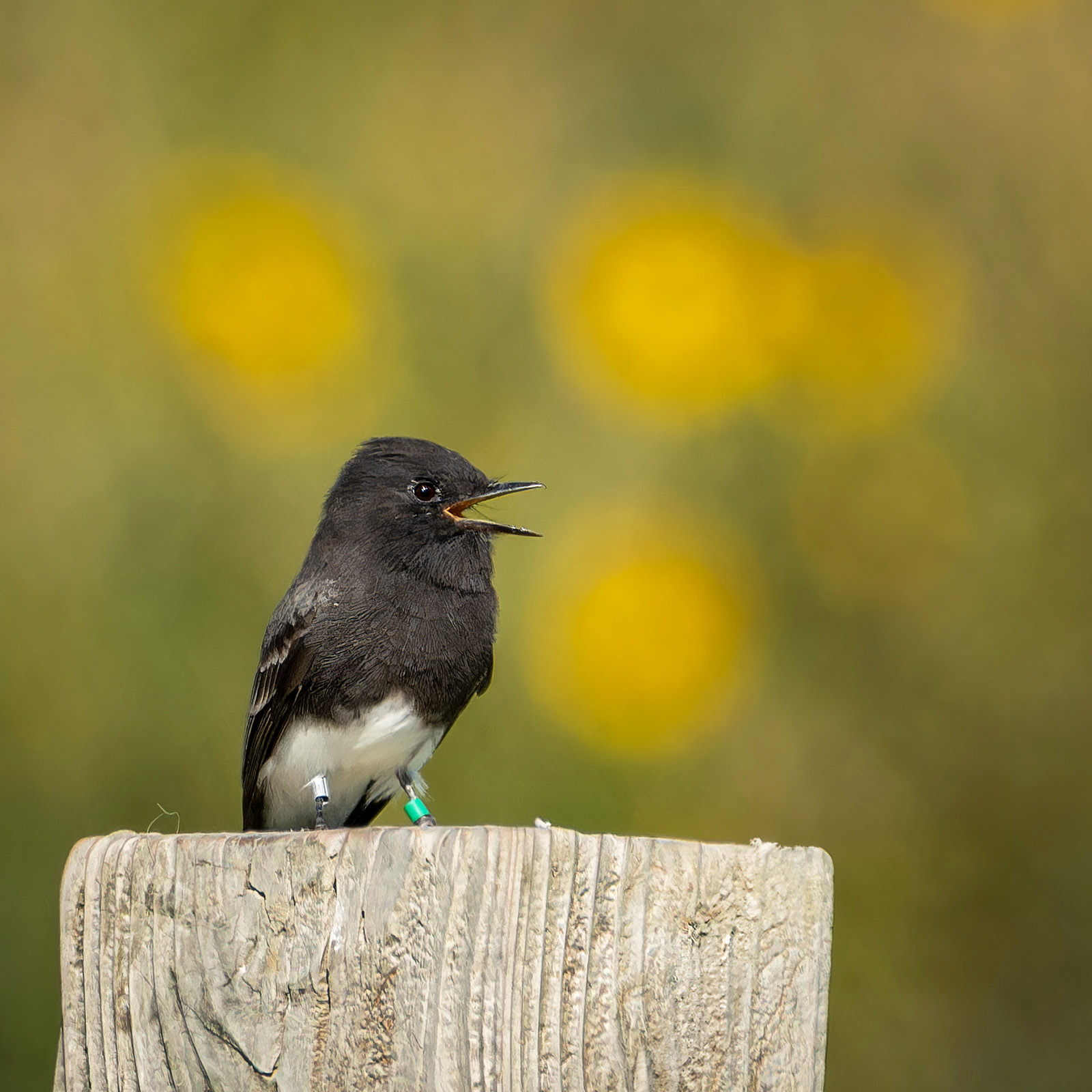
Every once in a while, a bird surprises me – not by doing anything dramatic, but simply by being someone special. That’s what happened the morning I photographed this female black phoebe at Yolo Bypass Wildlife Area, a top birding spot near Davis, CA. At first glance she looked like any other phoebe: quick tail-flicks, sharp little calls, a habit of bouncing between perches like she had too many appointments.
Then I saw the bands on her legs. I knew that meant something special, but not until I got back to my room and took a closer look did I find out how special.
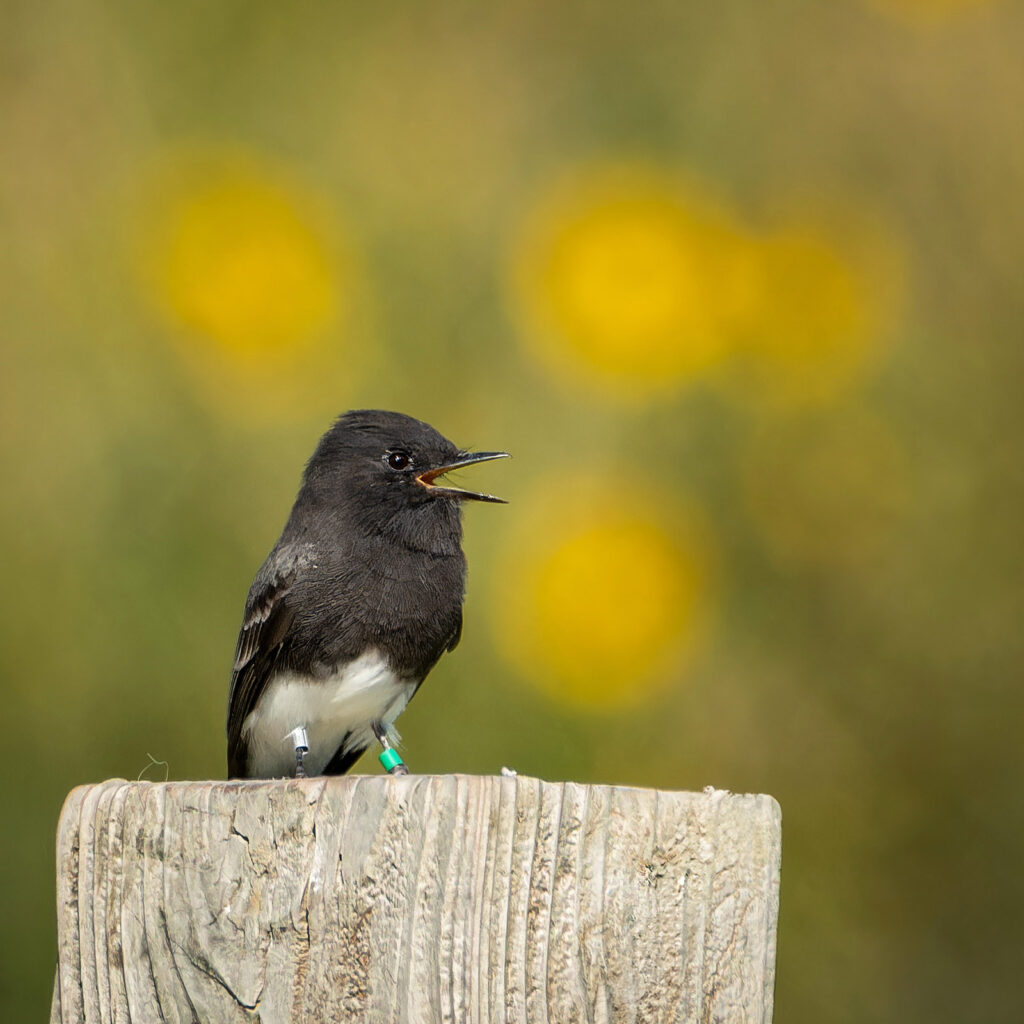
She wasn’t just another bird going about her day. She was part of Project Phoebe, a long-running research effort tracking Black Phoebes across California to learn more about their survival, nesting success, and how they navigate a world that’s changing faster than they are.
And suddenly, this small moment meant something bigger.
What Is Project Phoebe?
Project Phoebe’s team studies these charismatic little flycatchers by marking individuals with a unique combination of color bands. The bands allow researchers to identify specific birds from a distance – no recapture, no disturbance, just good eyes and good notes.
Those sightings help answer questions like:
- Do phoebes return to the same nest sites year after year?
- How far do young birds disperse?
- How does habitat affect survival and nesting success?
- And how are these birds adapting to the human-shaped environments we’ve built?
It’s science that happens quietly, consistently, and right alongside all of us who spend time outdoors.
A Small Encounter With a Big Science Story
The phoebe I photographed – a female – was perched confidently on a weathered post in Yolo Bypass Wildlfe Area, calling into the soft morning light. She looked completely ordinary and completely extraordinary at the same time (a lifer for me). Seeing her banded legs felt like stumbling into someone else’s notebook, someone else’s long-term research story.
I love moments like that. When photography overlaps with conservation, it feels less like taking a picture and more like participating. My images of this little bird aren’t just portraits; they’re tiny data points that confirm where she was, what she was doing, and that she’s still out there doing her job.
And maybe that’s why she lingered for a few photos – she had a role to play, and so did I.
Why Photos of Banded Birds Matter
Images like these can:
- Confirm the continued survival of individual birds
- Help researchers track movement and behavior
- Document habitat use
- Serve as public, visual records of field observations
It’s a small but real contribution, especially for long-term studies that rely on community observations.
And honestly, it’s just incredibly fun to know the bird in front of you has a name — or at least a color code. This bird’s bands conveyed the following information which I received in an email from a Project Phoebe researcher:
“Thank you very much for submitting this report! The Phoebe you spotted is an adult female that we banded last year when she was attempting to nest on the rice weirs at YBWA. She was about a year old when we banded her, so she would be about 2 years old now. We did not see her at all this year during our monitoring, so it is very useful to know that she is still alive and well!”
Want to Learn More?
If you’re curious (and I highly recommend going down this rabbit hole), visit ProjectPhoebe.com.
You can learn how the project works, see updates from the field, and even report sightings of banded phoebes if you’re lucky enough to spot one.
Science doesn’t always happen in labs – sometimes it stands on a little post in a wetland by the highway and yells into the wind!
Final Thoughts
I walked away from this encounter feeling grateful. Not every bird lets you photograph a story instead of a moment. This one did, and I was so happy to find out the full story.