
Trip Report – Caddo Lake, Texas | Nov 1-4, 2025
Field Notes from the World’s Largest Bald Cypress Swamp
I spent four days (well – two and a half, actually) at Caddo Lake at the start of November, exploring a part of the country I’d only seen in photographs – the kind of shots that look more like dream sequences than actual places.
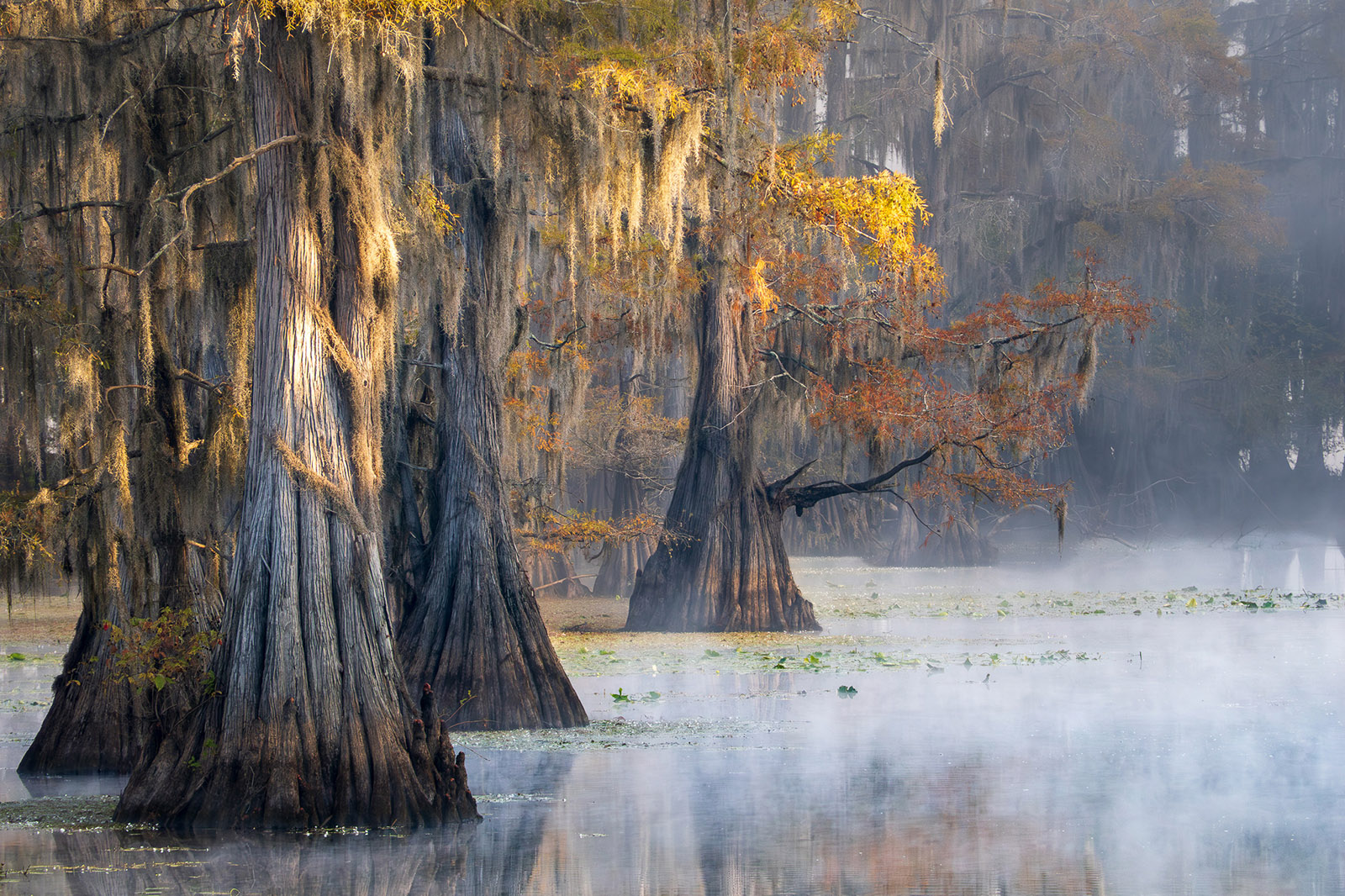
Caddo Lake straddles the Texas–Louisiana border, and is about an hour northwest of Shreveport, LA. At around 25,000 acres it’s the largest bald cypress swamp in the world. Photographers know it for its fog and gorgeous profusion of Spanish moss; locals know it for fishing and backwater boating. I went as part of a NANPA Regional Event fall color tour, hoping to see the long-awaited ghost trees rising from the mist…
Weather in Early November
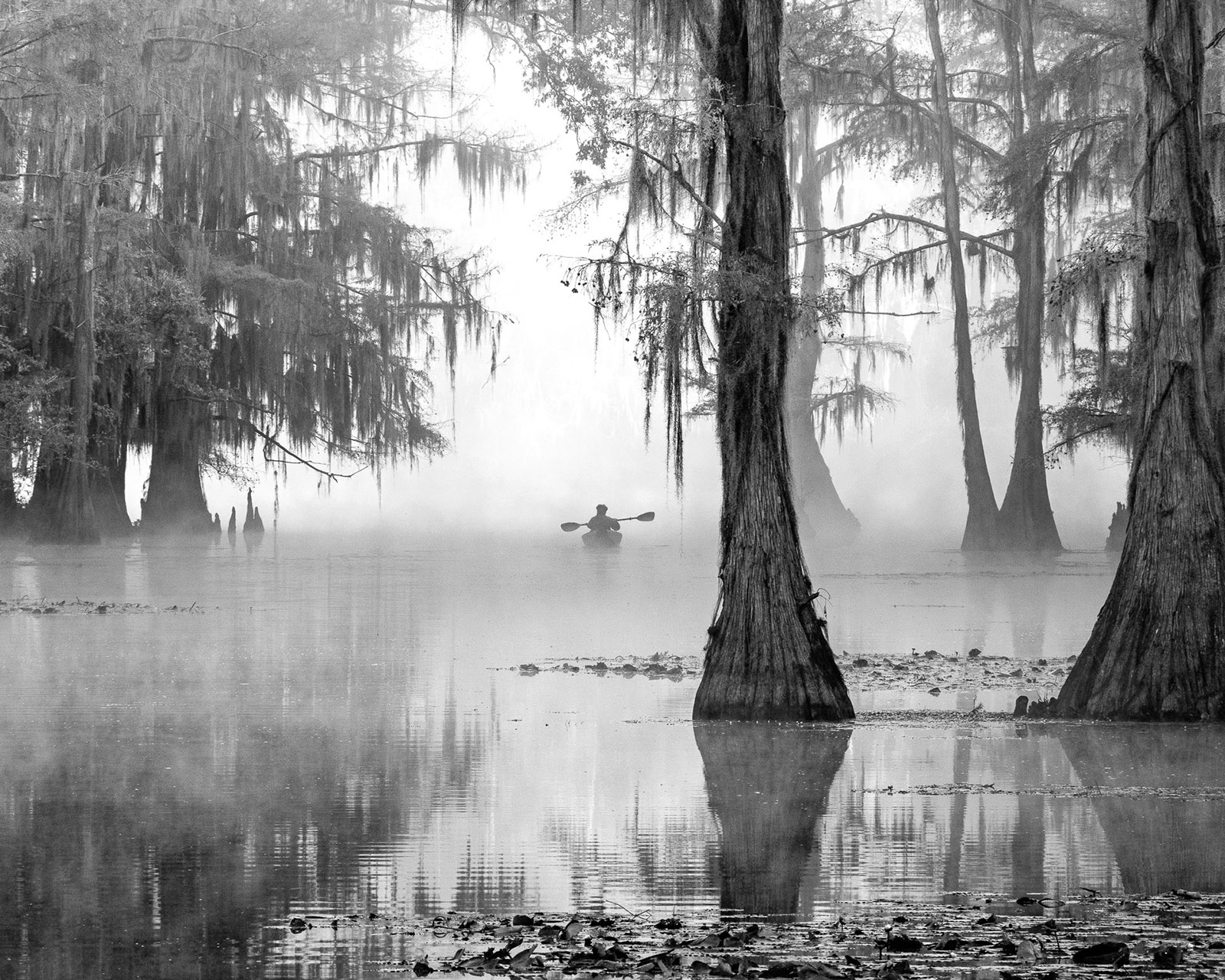
The weather during the trip fit the mood I wanted to be in: humid, sunrises in the 40s, soft light breaking over flat water most of the time, and afternoons warming into the 60s and 70s. Every shooting session felt a little different. The only time we got the trademark fog was the first morning at Caddo Lake State Park from a boardwalk (not a boat).
Unexpectedly Bare Bald Cypresses
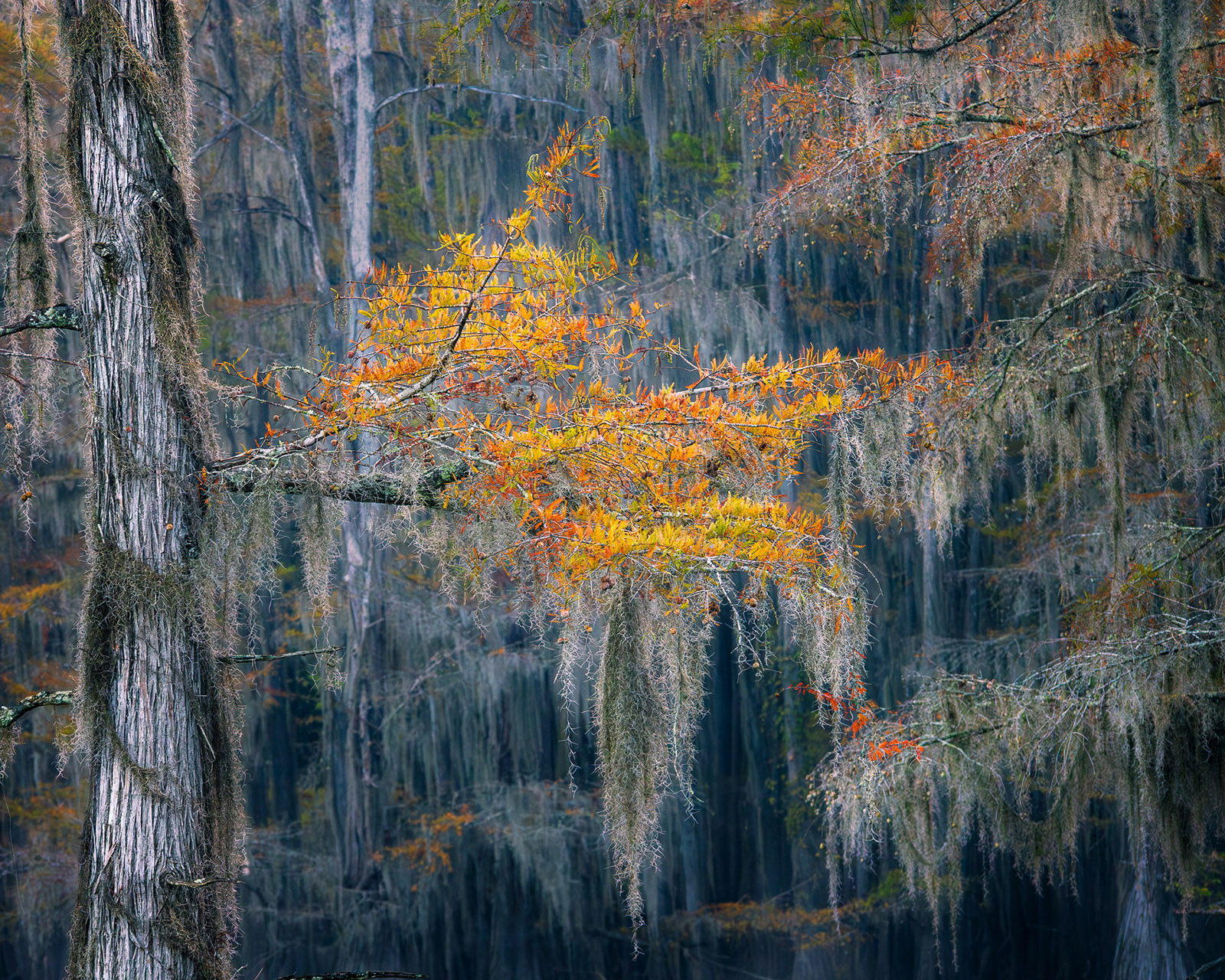
We were all suprised by how bare the cypresses were. Caddo is normally bright with fall color in early November (I’ve seen so many of those photos), but an outbreak of the cypress looper moth caterpillar had already stripped most of the trees. A new treatment used in the lake this year, meant to control invasive plants, also knocked out the predator that normally keeps the caterpillars in check – someone didn’t do their research, right? The result was a swamp that looked more like early winter and stick season: stark branches, muted colors, and a strange stillness. It was still beautiful, but very different than I expected.
Wildlife Sightings at Caddo Lake
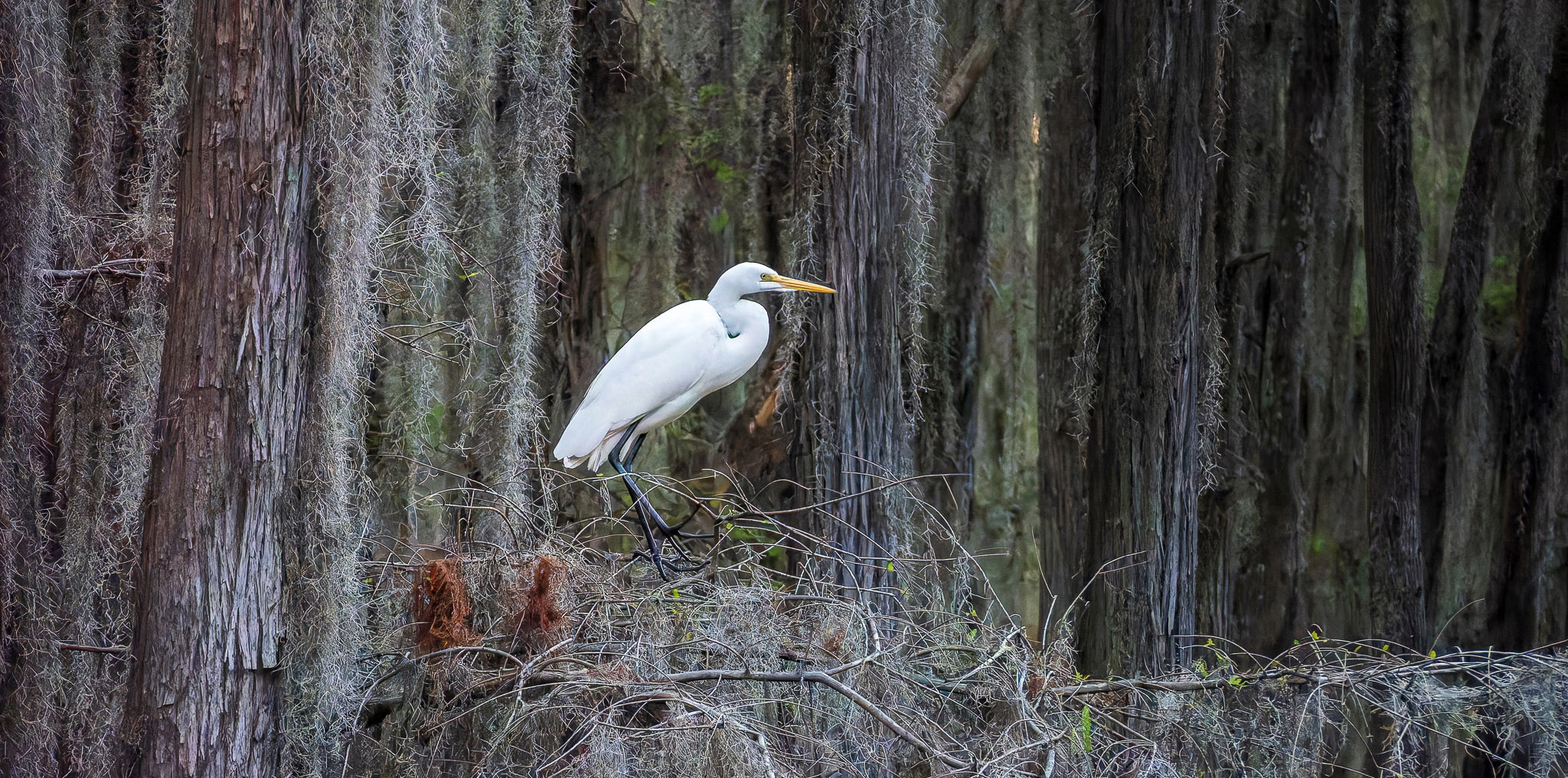
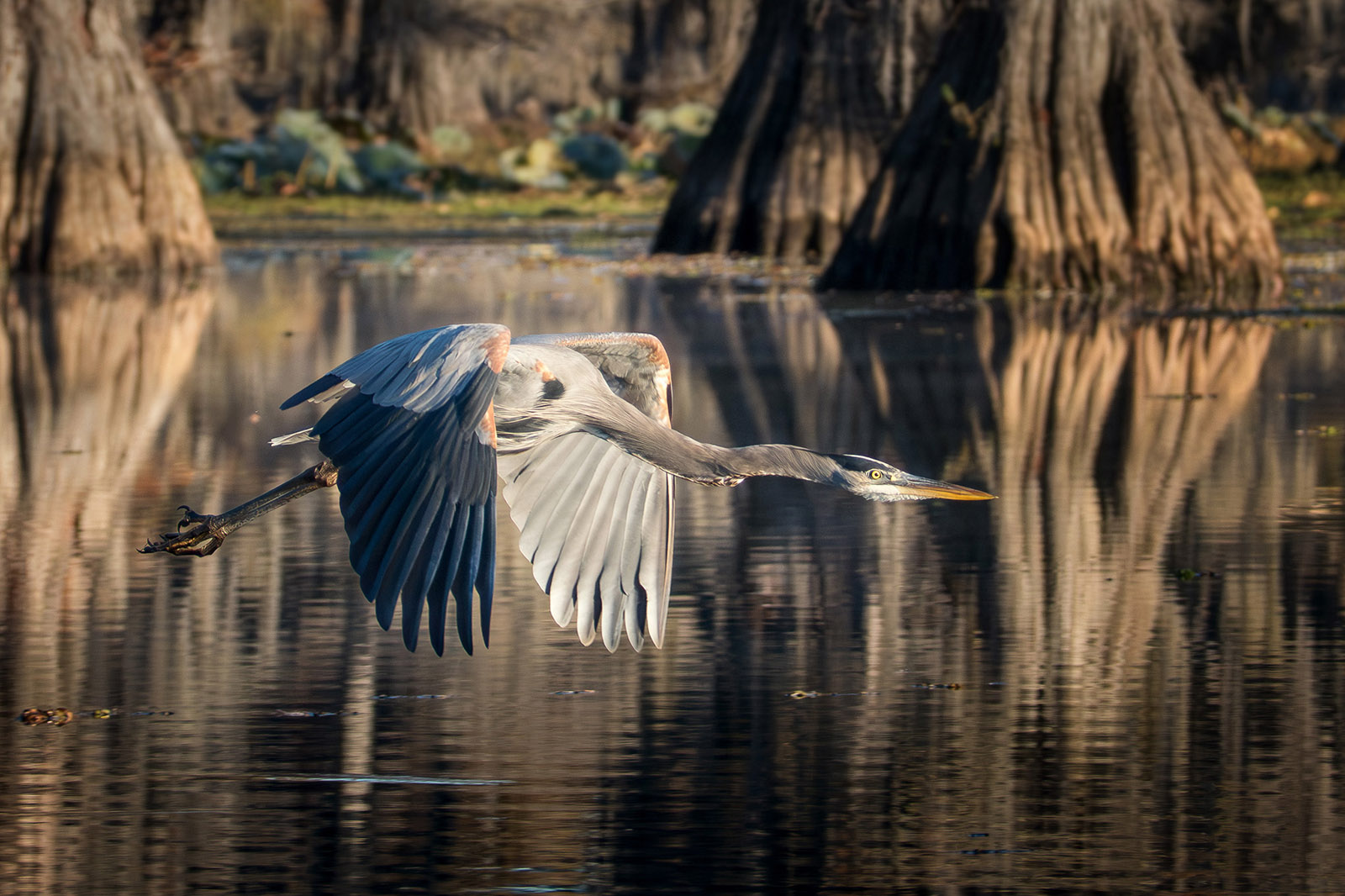
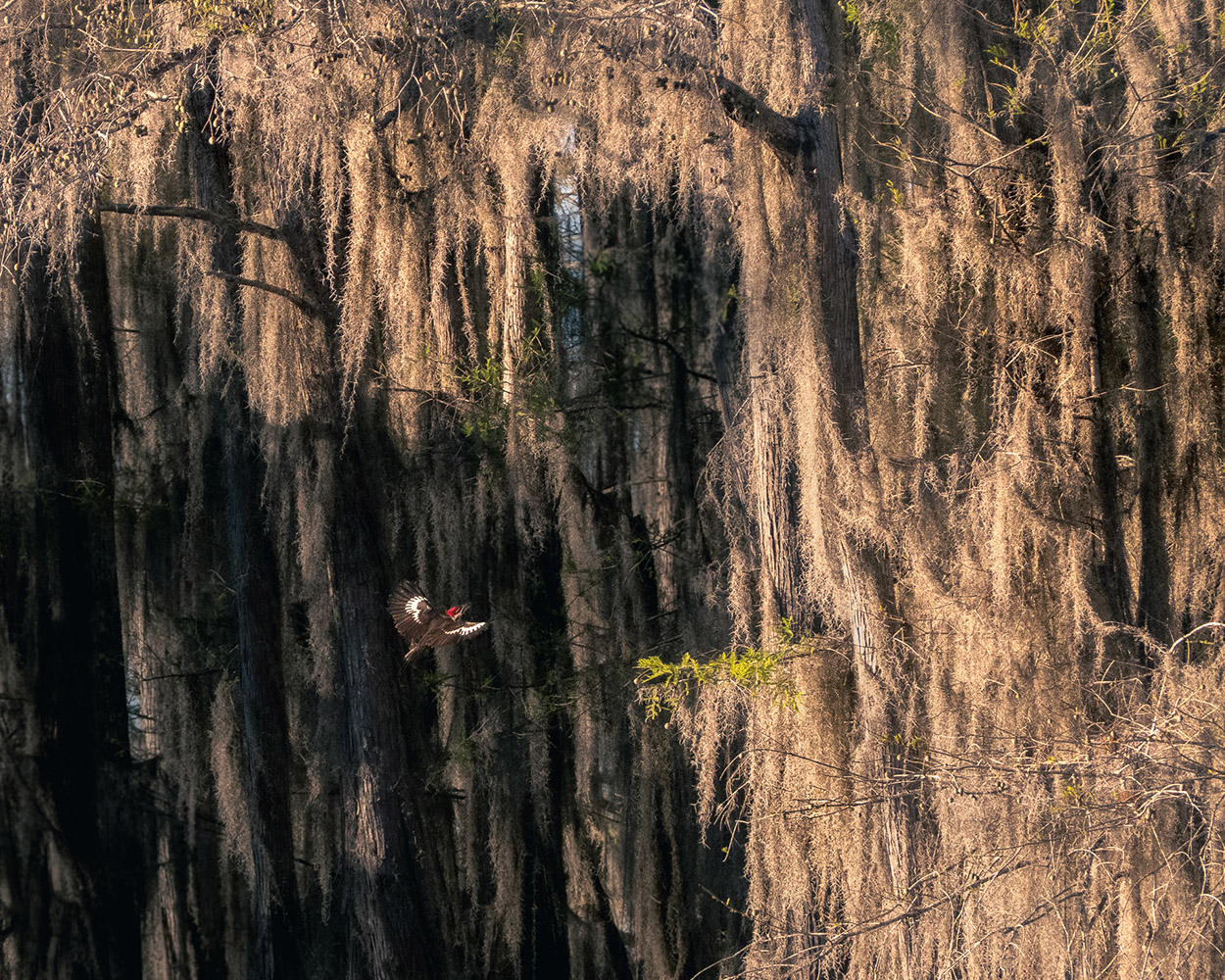
Even though this wasn’t a wildlife-focused trip, the birds made themselves known! Great and snowy egrets drifted through the fog like ghosts. Great blue herons patrolled the edges of the bayous and one flew so close to the boat once I felt like I could reach out and touch it. A pair of bald eagles ignored us from a high perch. We spotted one pileated woodpecker hammering away in the trees and saw a few kingfishers as we motored through narrow channels in our rental pontoon. We were on the boat during three shooting sessions: two chilly, quiet mornings and one warmer glowing evening. Unfortunately, no clouds, so we didn’t get a lot of color in the sunrises and sunsets.
Accessing the Lake
Access couldn’t have been easier – our motel was a short walk from the dock and just a quick drive to Caddo Lake State Park. It wasn’t crowded, on land or on the water, and sunrise and late afternoon were unquestionably the best times to be out. The lake is a labyrinth, and you simply can’t appreciate its scale without a boat. There are many little inlets, channels and pockets of trees you’d never know existed from shore. If someone wants to really experience Caddo, hiring a guide and/or renting a boat is essential.
Brand New Camera Gear!
This was also my first trip with the OM-1 Mark II, and I spent a lot of the week learning on the fly. I used the 40–150mm f/4–5.6 R for most of my shooting – the swamp often keeps you pretty close to your subjects – and switched to the 100–400mm for birds or more distant trees. Despite the learning curve, the camera handled the low light beautifully with much faster lenses than I had before; the AF found subjects much more consistently than I was used to with my Fuji kit, and the noisy RAW files cleaned up easily. By the second morning I felt much more confident and muscle memory was building up. I ended up with a surprising number of keepers: birds tucked among Spanish moss, a great blue heron flying across a foggy opening, small pockets of fall color in Caddo Lake State Park, and more than a few moody tree portraits.
The Not-So-Great Parts
Not everything was idyllic. I missed the small group meet-and-greet the first evening due to flight delays. I was supposed to arrive at the lake around 5pm, but wound up pulling in to the lodgings at just around midnight – it was an incredibly long and stressful day. And the next morning, getting up at 4:45 am was rough.
Our lodging turned out to be less “rustic motel” and more “fishing camp with some surprises.” Thin walls, loud partiers, a missing hairdryer, and a toilet that wasn’t actually attached to the floor made it interesting. The managers weren’t on-site, which made dealing with anything a little bit of an adventure. If I returned, I’d happily drive another thirty minutes for better accommodations. I’d also go in spring next time – our boat pilot said the bird activity is supposed to be excellent and the lake has a very different personality that time of year.
If You Go…
There are some things I’d tell anyone planning a trip to Caddo Lake. The light can be magical at sunrise if you’re lucky enough to get fog. Bring grippy shoes for wet boat decks and layers you can add or remove easily. A mid-range zoom is incredibly useful, and a longer lens is worth having for wildlife. Watch for deer on the roads early and late in the day – they were really everywhere.
The closest town-sized place is Jefferson at about 18 miles to the west. Also, most restaurants in the area close on Mondays and Tuesdays, so plan food ahead. And if you’re traveling solo, be discerning about lodging; arriving at midnight and immediately running into police officers asking if I’d heard gunshots was… memorable.
Final Thoughts
I’m not sure yet whether I’ll return, but if I do, it’ll be in spring to see the swamp in a different mood – greener, more alive, and louder with birds. Caddo Lake is an interesting part of the country with haunting, moss-draped bald cypress trees, and even with the bare branches and quiet water, it was worth at least one trip. If you want to get the most out of it, bring a camera, hire a boat, be a little lucky and let the fog do the rest.