
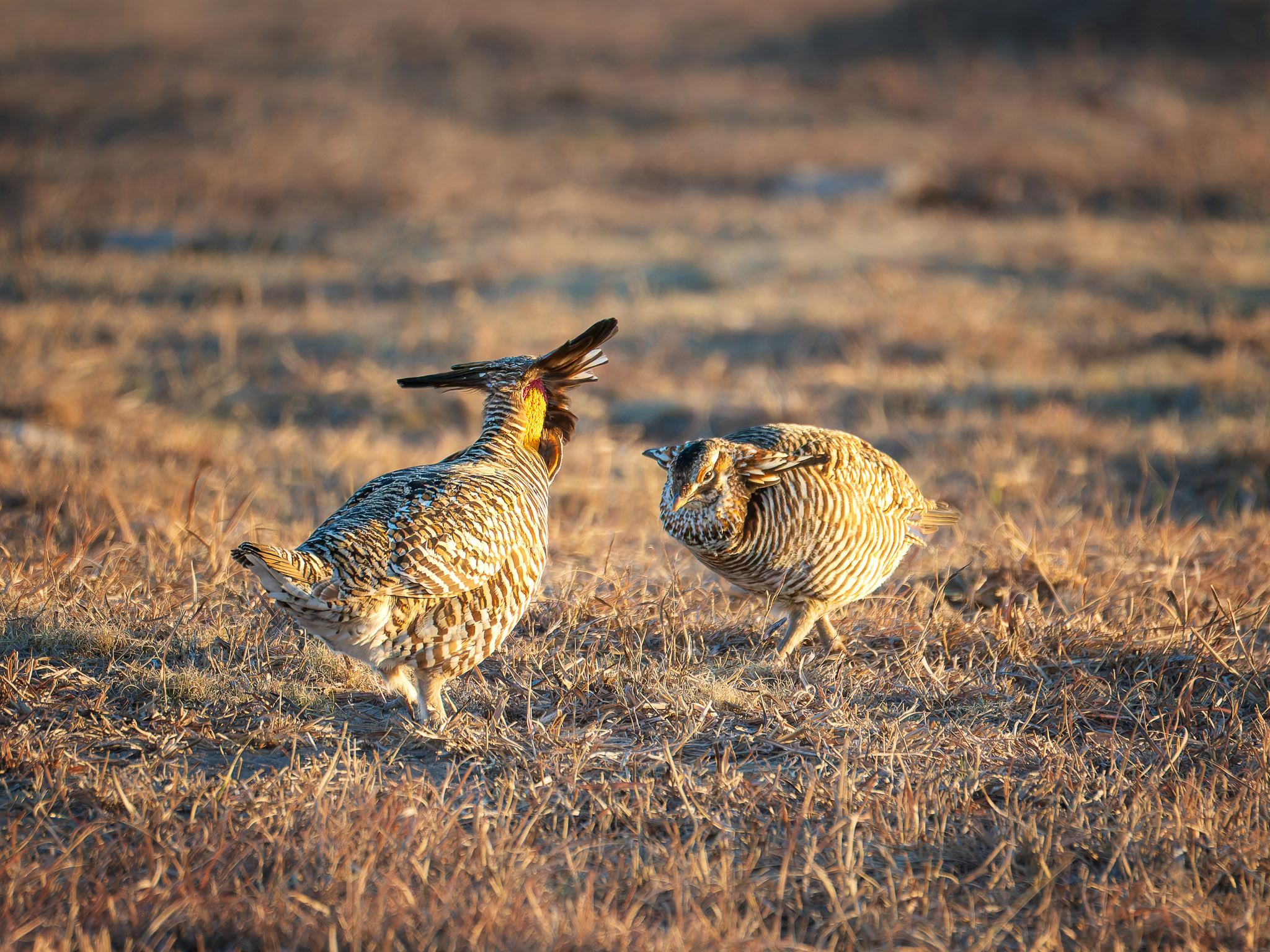
Trip Report – Wray, CO | March 28, 2026
Highlights from the Greater Prairie Chicken Tour
This was actually my second Greater Prairie Chicken Tour with the town of Wray. The first time I went with my husband (who gamefully drove the 3 hours to Wray and back and got up at 4:30 am with no complaining) in 2022. That time, we loved the experience, even my non-birder partner. But the photography – just nope.
I was still using the Fuji X-H2S and the 150-600mm lens – a combo that was pretty much useless in low light shooting anything that twitched. Since we arrived well before sunrise, there were no even remotely usable photos. Frustrating.
This time, though – this time was soooo different.
I had my newish OM-1 Mark II and OM SYSTEM M.Zuiko Digital ED 100-400mm f/5-6.3 IS II, a wonderful pairing for shooting dancing chickens before and after the prairie sunrise. And video (I’m new to video, but I got some). And a chance to try out my brand new DJI Osmo Pocket 3 video camera as well.
My husband declined a second journey to Wray, but I had an amazing time. I used my monopod (the blind was packed with people, no room for a tripod) and my Osmo or my camera on that, and then later as it got bright switched to handheld camera. I got enough video clips to actually do something with them. So – of course I downloaded DaVinci Resolve and dove into learning the very basics of video editing last weekend. And I’m pretty happy with what I came up with as a complete beginner.
Early Morning Arrival
We met at the Wray Museum and got on our school bus (a brand new one we were told) at 4:50 am and promptly at 5 am pulled out. We drove on a maze of paved, gravel and washboard roads for a good 20-30 minutes before arriving at the blind, which is a nice trailer with two rows of benches covered with cushions. There are blankets stored under the benches and most people used them, as it was around 30-35F when we arrived. Sunrise was at 6:39 am.
The lek is on property owned by the Kitzmiller Grazing Association and has been used by greater prairie chickens for at least 100 years. The Wray Chamber of Commerce, CO Division of Wildlife, the East Yuma County Historical Society and the KGA work together to present and run the tours.
Everyone settled with their gear and we were given direction to open the two big panels facing the lek (which have hydraulics to make them easier to move). Once they were up, it was mostly silence after that. And it was totally dark. And very windy – winds from the south moving across the front of the blind at 20-25 mph. But thankfully not too cold – I never put my big photography gloves on, just stuck with the wool liners and I was comfortable.
We sat quietly and waited, listening to the wind gusts moving over and jostling the trailer.
Boom!
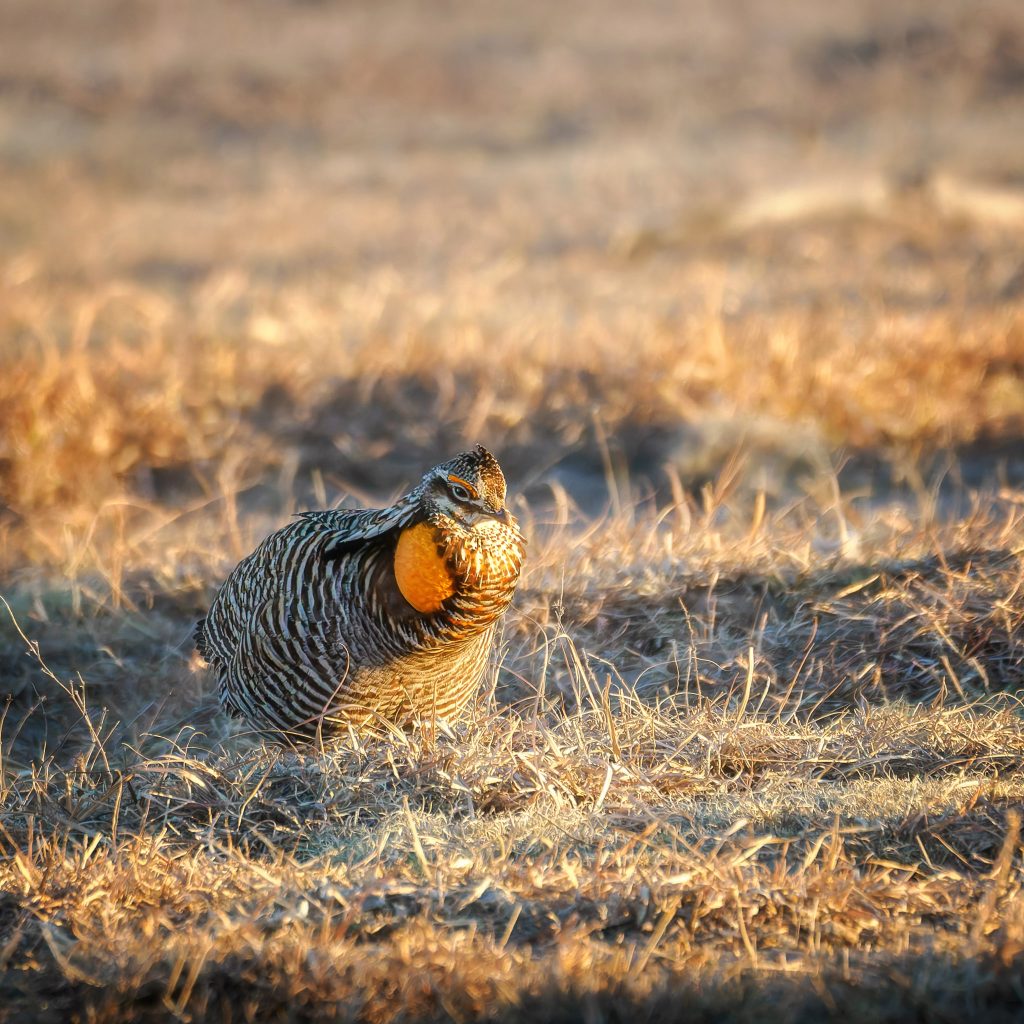
Eventually we began to feel and hear the low booming noises that the male chickens make with their air sacs. It sounds rather like an Entish ‘hoom’ or the low-pitched rumble of elephants. Then, we were starting to barely make out some movement on the lek, little things running around. As the light began to slowly come up we could see more and more males (eventually 21-24 males) arriving and beginning to engage with each other.
Things began to happen very fast…
As the light came up and the activity picked up, it became less about trying to capture everything at once and more about watching for moments to come together. I ended up with a good mix of stills and short video clips that together feel like a much better representation of the entire experience.
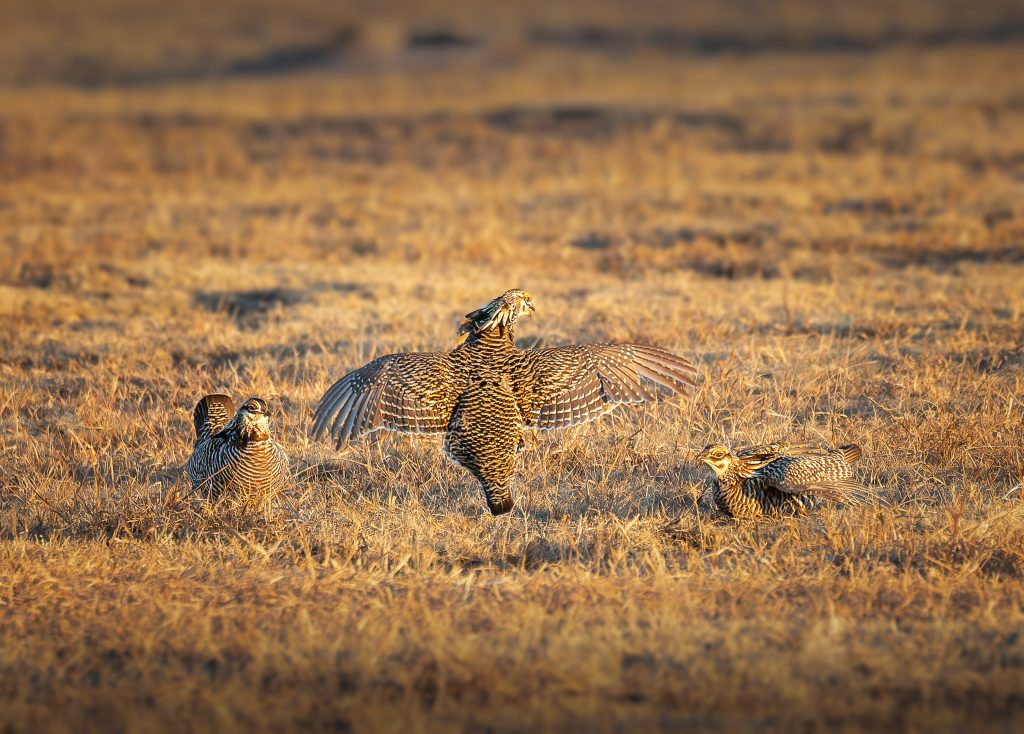
First the dancing. Males raise their pineal feathers that normally lay flat on their necks and stomp their feet rapidly against the ground. They spread their wings in a bowing motion and inflate the orange air sacs on the sides of their necks to make the percussive booming sound which was everywhere around us in the miniature valley of the lek. It is so fun to watch!
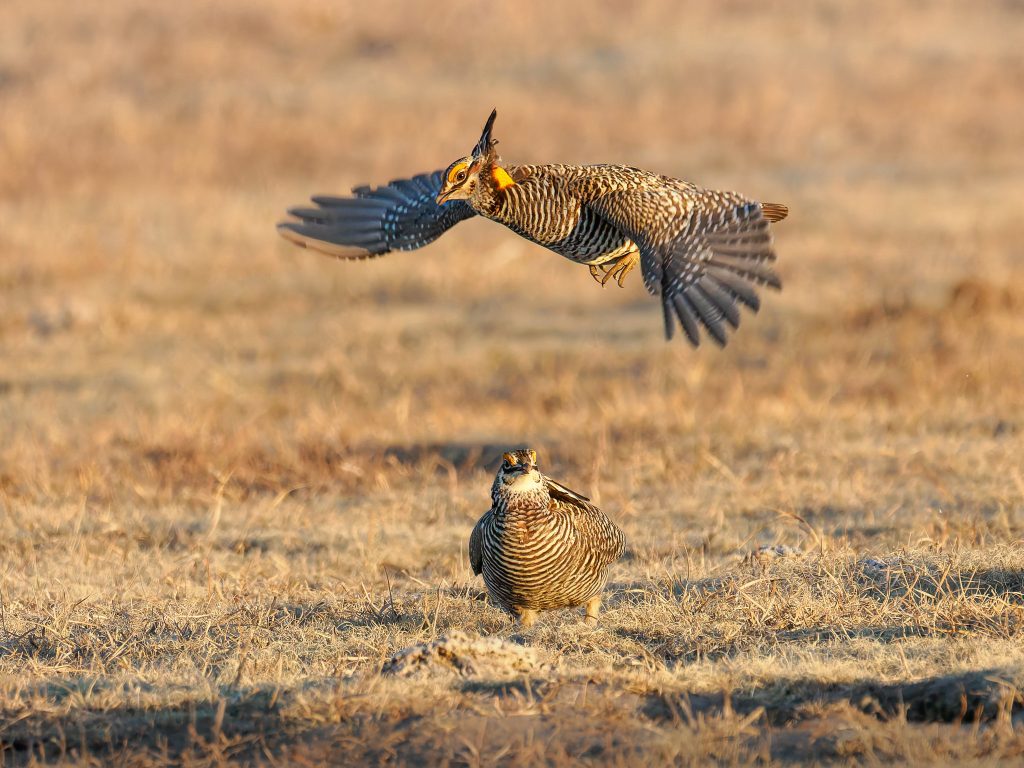
The males also faced off with each other over their small territories across the lek, and they fought by charging each other, flying at each other and displaying their talons and pineal feathers.
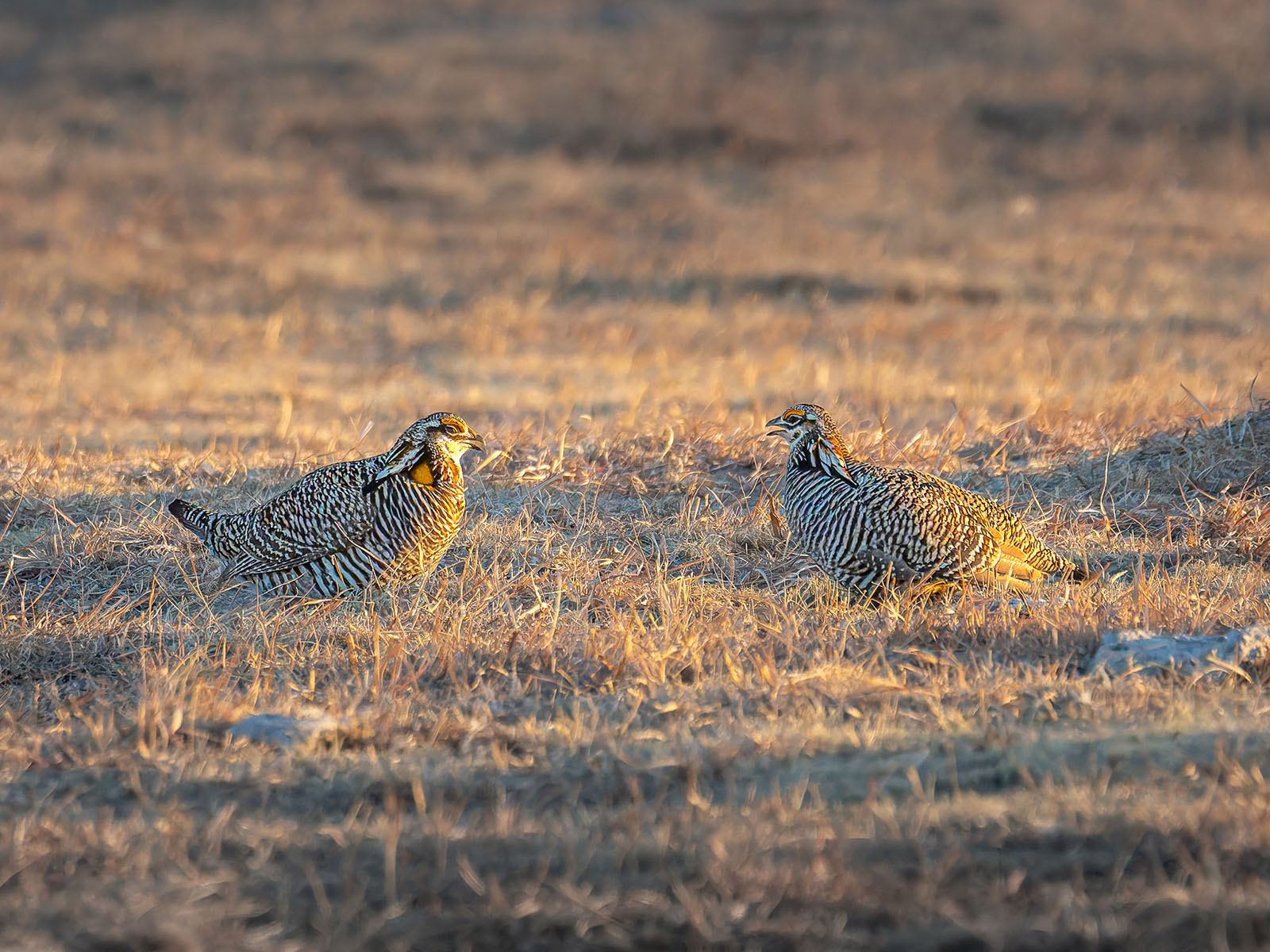
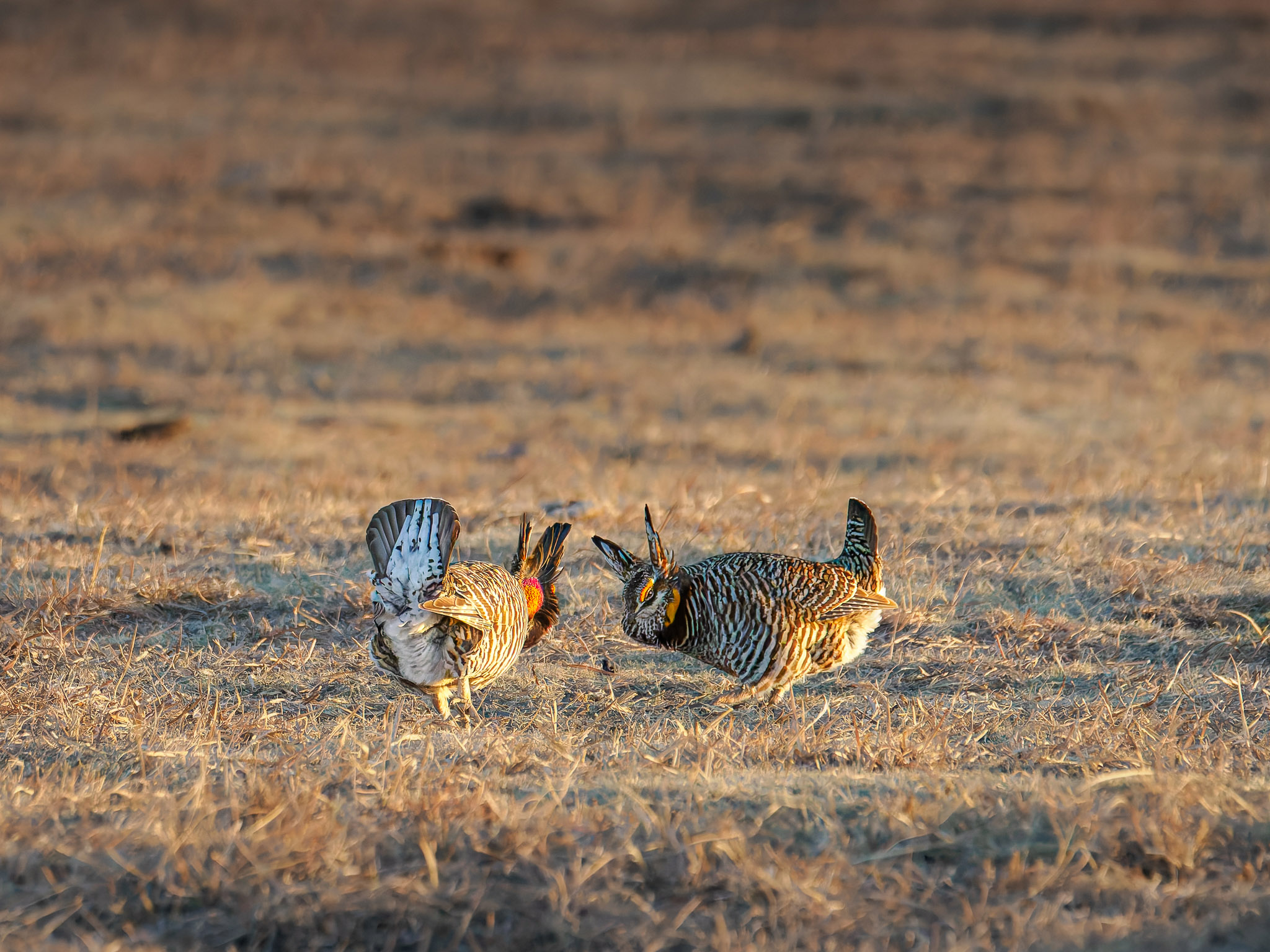
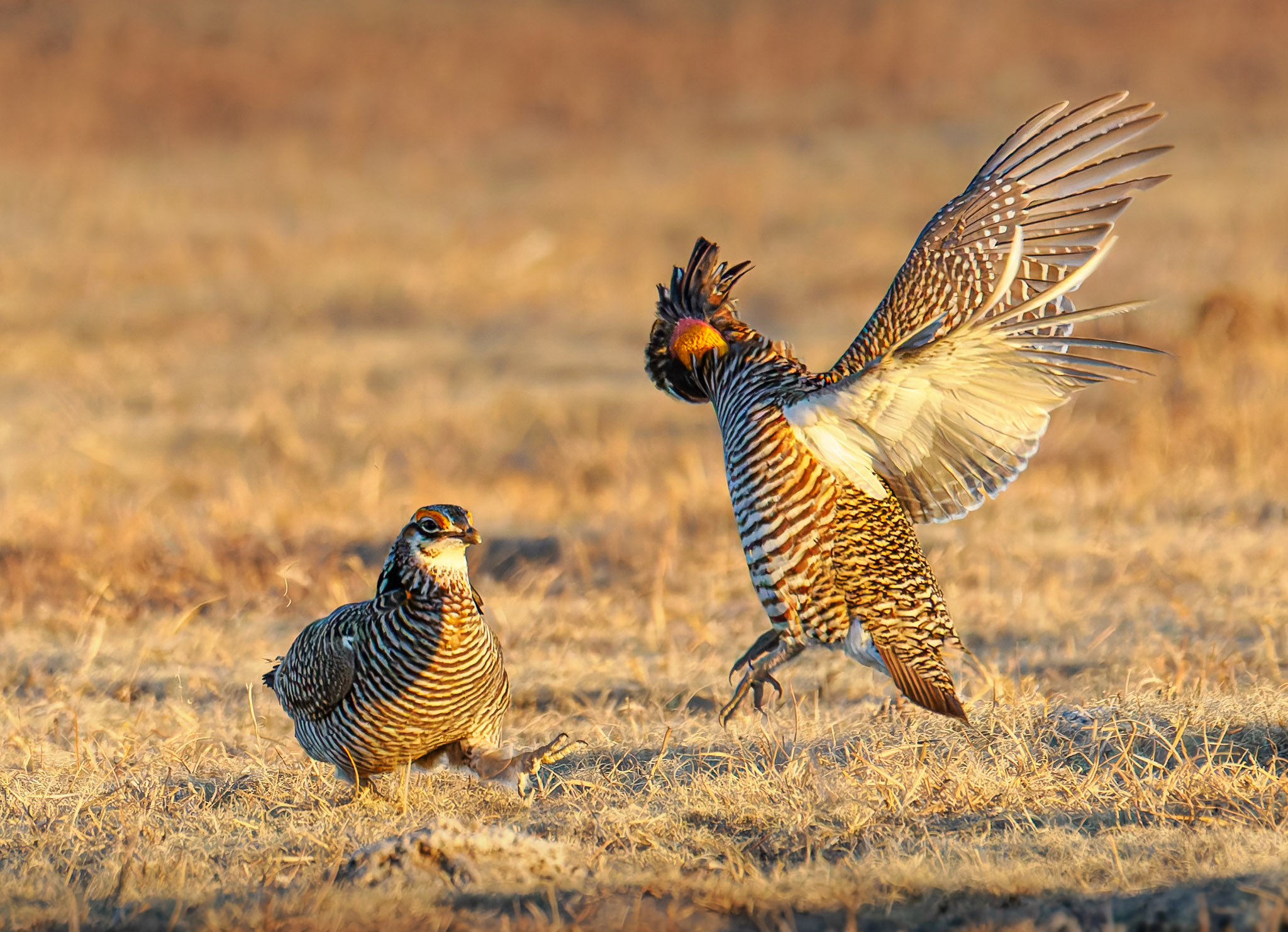
This keeps up until one chicken chases another one off or they both settle quietly, still facing each other as if to say “I’m still watching you.”
I don’t think we saw one female this time – the females don’t show up every time. The males kept up their dancing and occasional dustups anyway, and were still at it when we left about 2 hours after arriving.
The roads somehow seemed a lot worse on the way back – teeth-rattling washboards. But we had a great breakfast provided by the Kitzmiller Grazing Association and this is included in the tour.
Summing Up
I couldn’t wait to see my photos and video, but it was a long drive home. I learned a lot on this trip about the new camera’s capabilities, shooting in very low light, and the Osmo video camera.
It was a very different and much more satisfying trip than in 2022 for sure. It felt a lot less like flailing around chasing photos my camera was not capable of capturing, and a lot more like calmly observing behavior and waiting for moments to come together, then being able to catch them in photos and video much more easily.
There were a lot of people from Colorado but a few were from other states including Texas and Alabama. Everyone had a good time and there were lots of happy people at breakfast. I’d recommend taking one of these tours especially if you’re a birder (or photographer) living on the Front Range.